

TL;DR:
- A letter of wishes is a non-binding document that guides trustees and executors on personal intentions and values, shaping discretionary decisions collaboratively. It complements formal legal documents by explaining reasoning and preferences, reducing family disputes, and providing valuable context without creating enforceable rights. Regularly reviewing and updating the letter ensures it remains relevant, while clear disclaimers prevent misinterpretation or legal challenges.
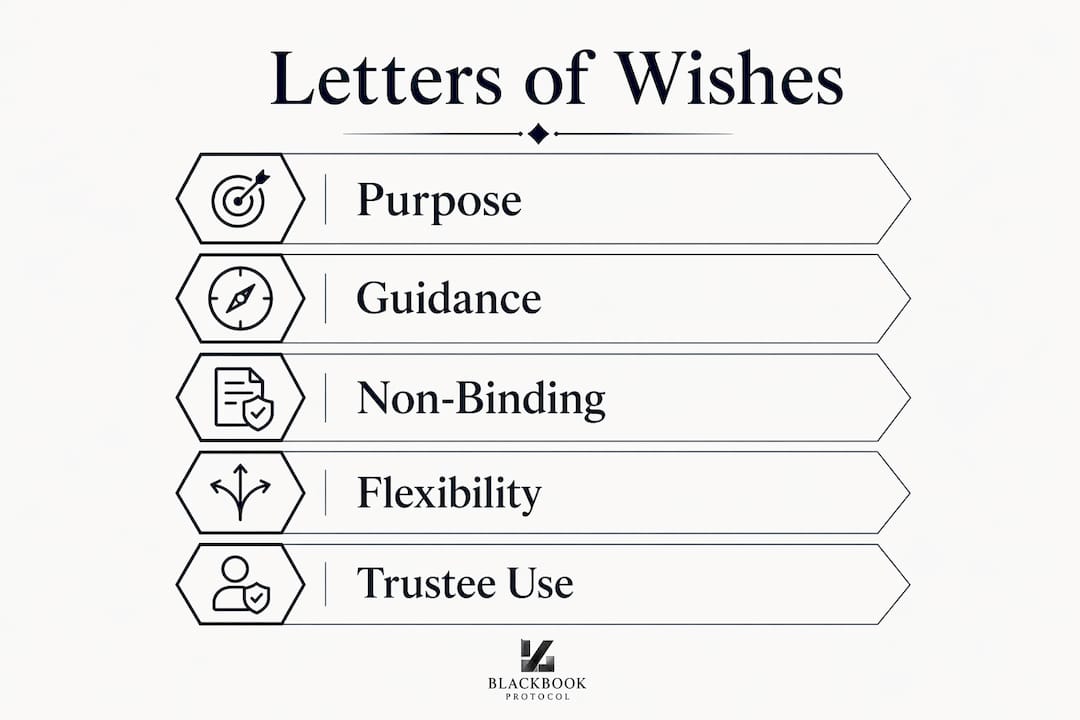
A letters of wishes document is a written statement prepared alongside a will or trust that provides non-binding guidance to trustees and executors about your personal intentions, values, and preferences. Unlike a will, it carries no legal force. Yet it shapes how discretionary decisions are made, explains sensitive choices to family members, and fills the human gaps that formal legal documents cannot address. For anyone engaged in estate planning, understanding this document is the difference between leaving a clear legacy and leaving confusion.

What is the legal status of a letters of wishes document?
A letters of wishes document is non-legally binding but constitutes an important relevant consideration for trustees when exercising their discretionary powers. This distinction matters enormously. Trustees are not compelled to follow the letter, but they are expected to read it, weigh it, and demonstrate that they have taken it into account when making decisions.
Trustees operate under fiduciary duties, including loyalty and prudence. These duties mean that trustees must balance the wishes expressed in the letter against their legal obligations to all beneficiaries and the terms of the trust deed. Where a conflict arises between the letter and a trustee’s legal duty, the legal duty prevails. A trustee who blindly follows a letter of wishes at the expense of a beneficiary’s interests could face legal challenge.
The practical implication is that a well-drafted letter of wishes carries real weight without creating enforceable rights. Trustees who ignore it entirely, without good reason, risk criticism from courts and beneficiaries alike. The letter functions as a vessel for relevant considerations, helping trustees understand the settlor’s values and reasoning rather than simply following rigid instructions.
Pro Tip: Always include an explicit statement in your letter confirming that it is non-binding and that trustees retain full discretion. This single line prevents beneficiaries from treating the document as a legally enforceable instruction.
What types of guidance can you include in a letters of wishes document?
A letters of wishes document can cover a broad range of personal and practical matters that sit outside the scope of a formal will or trust deed. The content of a letter typically includes:
- Funeral and burial preferences, including specific requests for services, music, or location
- Guidance on sentimental possessions, such as jewellery, artwork, or family heirlooms, and who you would like to receive them
- Explanations for controversial decisions, for example why one child receives a larger share or why a particular beneficiary has been excluded
- Guidance on discretionary trust distributions, including how and when trustees should release funds to beneficiaries
- Personal messages to loved ones that you would not wish to include in a formal legal document
- Guidance on beneficiary support, such as whether a beneficiary with financial difficulties should receive funds outright or in stages
Letters of wishes often accompany discretionary trusts to guide asset distribution, investment priorities, and beneficiary considerations without requiring formal amendments to the trust deed. This flexibility is one of the document’s greatest strengths.
The key is balancing specificity with adaptability. A letter written in 2026 may be read by trustees in 2040. Family circumstances change. Beneficiaries’ needs evolve. Write with enough detail to be genuinely useful, but avoid language so prescriptive that it becomes outdated or creates unintended expectations.
Pro Tip: Avoid writing your letter as a series of instructions. Phrases such as “I wish” or “I would like trustees to consider” signal guidance rather than command, which protects both you and your trustees.
How do letters of wishes reduce family disputes?
A letters of wishes document is, in practical terms, your last chance to prevent inheritance conflict by explaining your decision-making in your own words. Disputes rarely arise because beneficiaries disagree with a decision in principle. They arise because they do not understand the reasoning behind it.
Consider a common scenario: a parent leaves a larger share of the estate to one child who provided years of unpaid care, while the other children receive equal but smaller portions. Without explanation, this looks like favouritism. With a letter of wishes that explains the reasoning clearly, the decision becomes understandable, even if not universally welcomed.
“Explaining your decision-making in your own words via a letter of wishes can be the last chance to prevent inheritance conflict and provide clarity to loved ones.” — Yahoo Finance UK, 2026
While letters of wishes are not legally binding, they may be considered as evidence of intentions in inheritance disputes. Courts and mediators can refer to the document to understand what the deceased intended, even if the document itself cannot be enforced. This evidential value adds a practical layer of protection to the estate planning process.
Letters of wishes also support trustees directly. When a trustee faces a difficult discretionary decision, a clear letter provides the context needed to act with confidence. Without it, trustees are left to guess, which increases the risk of decisions that do not reflect the settlor’s actual intentions.
Best practices for writing and maintaining a letters of wishes document
Writing an effective letter of wishes requires attention to both content and process. Follow these steps to produce a document that genuinely serves its purpose:
- Use clear, non-directive language. Write in the first person and use phrases that signal guidance rather than instruction. Avoid language that could be read as creating legal obligations.
- Date and sign the document. A dated and signed letter carries greater authenticity and helps trustees identify the most current version of your wishes.
- Include an explicit non-binding disclaimer. Using precatory language and clarifying that the document advises trustees within their discretion is strongly recommended.
- Review and update regularly. Life changes, including marriage, divorce, births, deaths, and changes in financial circumstances, all affect the relevance of your letter. Later letters supersede earlier ones, so updating is both practical and necessary.
- Revoke previous letters explicitly. Multiple letters over time can create conflicts. Each new letter should clearly state that it supersedes all previous versions.
- Work alongside a legal or estate planning professional. A solicitor or trust specialist can review the letter to confirm it complements rather than contradicts the formal legal documents.
The following table summarises the key drafting considerations:
| Consideration | Guidance |
|---|---|
| Language style | Use “I wish” or “I would like trustees to consider” rather than “I direct” |
| Confidentiality | Specify whether the letter is confidential and who may access it |
| Frequency of review | Review at every major life event and at minimum every three to five years |
| Storage | Keep with the will or trust deed; inform your executor or trustees of its location |
| Professional review | Have a solicitor or trust specialist review the final draft |
Confidentiality deserves particular attention. Settlors may specify that the letter is confidential and limit its disclosure, for example to prevent minor beneficiaries from reading sensitive explanations until they reach adulthood. This is a practical measure that protects family relationships while preserving the letter’s usefulness for trustees.
Letters of wishes vs wills and trusts: what is the difference?
Understanding where a letters of wishes document fits within the broader estate plan requires a clear comparison with the other documents it accompanies.
| Document | Legally binding | Formal requirements | Typical content |
|---|---|---|---|
| Will | Yes | Signed, witnessed, dated | Asset distribution, executor appointment, guardianship |
| Trust deed | Yes | Drafted by solicitor, executed formally | Trust terms, trustee powers, beneficiary definitions |
| Letters of wishes | No | None prescribed | Personal guidance, reasoning, preferences, context |
A will governs what happens to your assets. A trust deed governs how a trust operates. A letters of wishes document explains why. This distinction is the core of the role of letter of wishes in estate planning. It fills the gap between legal structure and human values, shaping how discretion is exercised over time without altering the formal legal framework.
Letters of wishes are particularly valuable in three situations. First, where a discretionary trust is involved and trustees need guidance on distribution priorities. Second, where the estate includes sensitive family dynamics that require explanation. Third, where the testator holds strong personal preferences about matters such as funeral arrangements or the care of dependants that fall outside the scope of a will.
The documents work together. A will without a letter of wishes can leave executors uncertain about your intentions on personal matters. A letter of wishes without a will or trust has no formal legal context to operate within. Together, they form a complete picture of your estate planning intentions.
Key takeaways
A letters of wishes document is the most flexible and personal tool in estate planning, providing non-binding guidance that shapes trustee decisions, reduces family disputes, and fills the gaps that formal legal documents cannot address.
| Point | Details |
|---|---|
| Non-binding but influential | Trustees must consider the letter but are not legally compelled to follow it. |
| Broad content scope | Covers funeral preferences, sentimental gifts, trust distribution guidance, and sensitive family explanations. |
| Dispute reduction | Explaining the reasoning behind decisions reduces the risk of inheritance conflict among beneficiaries. |
| Regular updates required | Later letters supersede earlier ones; review at every major life event and revoke previous versions explicitly. |
| Complements formal documents | Works alongside wills and trust deeds to provide personal context and human values behind legal structures. |
Why I think most families underestimate this document
From my work with UK trust law and asset protection planning at Blackbookprotocol, the letters of wishes document is consistently the most underused tool in an estate plan. Families spend considerable time and money on wills and trust deeds, then produce a letter of wishes as an afterthought, if at all.
The mistake is treating the letter as optional. Trustees administering a discretionary trust without a current letter of wishes are operating without the most important piece of context available to them. They are making decisions about your family’s money based on inference rather than instruction.
The other common error is writing the letter once and never revisiting it. A letter drafted before a divorce, a business sale, or the birth of grandchildren may actively mislead trustees about your current intentions. I recommend reviewing the letter alongside your UK trust law compliance obligations every year, not every decade.
The letters of wishes document is where your values, your reasoning, and your personality enter the estate planning process. It is the one document where you speak directly to the people who will carry out your wishes. That deserves more than a paragraph written in an afternoon.
— Blackbook
How Blackbookprotocol can help you plan your legacy
Drafting a letters of wishes document that genuinely serves your family requires more than a template. It requires an understanding of how the document interacts with your trust structure, your will, and your broader asset protection strategy.
Blackbookprotocol provides expert blueprints for UK trust law, tax-efficient asset protection, and estate governance. The Blackbook Protocol hardback covers the full framework for securing your legacy, including practical guidance on letters of wishes, discretionary trust administration, and 95/5 equity structures. For families who want templates alongside the strategic framework, the asset protection blueprint includes ready-to-use documents designed for UK estate planning. Your legacy deserves a complete plan, not a collection of disconnected documents.
FAQ
What is a letters of wishes document in simple terms?
A letters of wishes document is a non-binding written statement that accompanies a will or trust, providing personal guidance to trustees and executors about your intentions, preferences, and the reasoning behind your decisions.
Does a letter of wishes have legal force?
No. A letter of wishes is not legally binding. Trustees must consider it but are not compelled to follow it, and their fiduciary duties take precedence where a conflict arises.
What should be in a letters of wishes document?
A letter of wishes can include funeral preferences, guidance on sentimental possessions, explanations for asset distribution decisions, instructions for discretionary trust distributions, and personal messages to beneficiaries.
How often should you update a letters of wishes document?
Review and update the letter at every major life event, including marriage, divorce, births, and significant changes in financial circumstances. Each new version should explicitly revoke all previous letters to avoid conflicting guidance.
Is a letter of wishes the same as a will?
No. A will is a legally binding document that governs asset distribution. A letter of wishes is non-binding and provides personal context, reasoning, and guidance that a will cannot accommodate.
0 commentaire