

TL;DR:
- A comprehensive wealth advisory compliance checklist maps every regulatory obligation, ensuring preparedness for SEC examinations. It emphasizes tailored policies, ongoing vendor oversight, multi-channel recordkeeping, and incident response drills to maintain audit readiness and regulatory compliance. Proper documentation, dynamic reviews, and automation tools are essential for effective governance and exam success.
A wealth advisory compliance checklist is a structured framework that maps every regulatory obligation an SEC-registered adviser must meet, from written policies to breach notification deadlines. The core pillars are Rule 206(4)-7, Regulation S-P amendments, recordkeeping standards, custody oversight, and the SEC Marketing Rule. Tools such as MyComplianceOffice, Smarsh, and guidance from Holland & Knight now form the operational backbone of any credible compliance programme. This article sets out each checklist component in the order examiners assess them, with 2026 regulatory updates built in throughout.
1. Written policies, procedures, and CCO designation
Rule 206(4)-7 requires every SEC-registered adviser to adopt written policies and procedures, designate a Chief Compliance Officer, and conduct an annual review. This rule forms the non-negotiable foundation of any financial advisory compliance guide. Without it, every other checklist item lacks a governing structure.

Your written policies must be tailored to your firm’s specific business activities, not copied from a generic template. A custody-heavy firm needs materially different controls than a fee-only planning practice. The CCO must have sufficient authority and resources to implement and enforce those policies across all business lines.
The annual review is not a box-tick exercise. Regulators expect documented evidence of gaps identified, remediation steps taken, and sign-off from senior management. Firms that treat the review as a static approval rather than an active assessment create the most significant exam risk.
- Written policies tailored to firm-specific activities
- Named CCO with documented authority and resources
- Annual review producing written work product, not a signature page
2. Form ADV registration and amendment management
Form ADV filings and their amendments must be tracked within the compliance checklist, including amendment triggers, submission timing, and internal role assignments. Missed amendment deadlines are among the most common deficiencies cited in SEC examinations. The checklist must assign a named owner for each filing obligation.
Amendment triggers include material changes to business activities, ownership, disciplinary history, and fee structures. Your checklist should include a quarterly review of whether any trigger has been met, not just an annual sweep. Firms that rely on memory rather than a documented trigger log consistently miss obligations.
Pro Tip: Set a calendar reminder 30 days before your annual ADV update deadline and assign a secondary reviewer to catch changes the primary owner may have overlooked.
3. Regulation S-P incident response and customer notification
Regulation S-P amendments enforce a 72-hour notification rule for vendors and a 30-day customer breach notification requirement. These deadlines are now compliance checklist items in their own right, not merely IT considerations. Firms that have not updated their incident response programmes to reflect these timelines are already non-compliant.
The 30-day customer notification clock starts from the point the firm reasonably determines a breach has occurred. That determination must itself be documented, timestamped, and linked to the incident log. Firms without a clear escalation path from detection to legal review to customer notification will struggle to meet the deadline under real-world pressure.
Tabletop exercises that simulate a data breach from detection through notification are the most reliable way to test whether your incident response programme actually works. Running one annually and documenting the outcome satisfies examiner expectations for preparedness.
4. Vendor and service provider oversight
Vendor oversight requires ongoing due diligence, monitoring, and contractual breach notification provisions. Examiners assess whether oversight is current and documented, not merely whether initial onboarding steps were completed. A vendor inventory that has not been updated since 2023 will not satisfy a 2026 examination.
- Maintain a living vendor inventory with last-reviewed dates and risk classifications.
- Conduct periodic due diligence reviews, not just at onboarding.
- Include contractual SLAs that reflect the 72-hour breach notification requirement.
- Document remediation plans for any vendor that fails a periodic review.
- Retain attestations and audit reports as part of your compliance file.
Vendor risk oversight is increasingly treated as an operational compliance function, not an IT management task. That shift means the CCO, not the technology team, is accountable for the completeness of vendor oversight documentation.
Pro Tip: Assign each vendor a risk tier at onboarding. High-tier vendors handling client data should receive annual reviews; lower-tier vendors can follow an 18-month cycle. Document the rationale for each classification.
5. Recordkeeping controls and off-channel communication
Recordkeeping failures in off-channel communications and vendor reliance errors remain a high exam risk in 2026. Checklists must cover multi-channel archiving, supervisor accountability, and periodic tests of retrieval completeness. Smarsh and similar archiving platforms are now standard infrastructure for firms with more than a handful of advisers.
The core recordkeeping checklist items are:
- Email, instant messaging, and text message capture across all business devices
- Supervision logs showing who reviewed what, and when
- Periodic retrieval tests confirming archived records are accessible and complete
- Documented procedures for off-channel communication prohibition and enforcement
- AI-assisted supervision tools for review efficiency across high message volumes
Recordkeeping is foundational for defensibility in examinations, requiring governance over a growing range of communication channels. Firms that rely on email alone and ignore messaging platforms used by advisers are creating a gap that examiners will find.
| Recordkeeping area | Checklist requirement |
|---|---|
| Email and messaging | Capture and archive across all business channels |
| Supervision logs | Documented reviewer, date, and outcome for each review |
| Retrieval testing | Periodic tests confirming completeness and accessibility |
| Off-channel controls | Written prohibition policy with enforcement documentation |
6. Custody policy design and supervisory controls
Custody policies must be explicitly defined with supervisory processes in place to prepare for SEC examinations. The checklist item is not simply “have a custody policy.” It is “have a custody policy that is reviewed on a defined cadence, linked to supervisory logs, and tested against current client asset holdings.” The distinction matters to examiners.
Firms that hold or have access to client funds or securities face heightened scrutiny. Your custody compliance requirements should include a documented review of which accounts trigger custody status, how those accounts are supervised, and what controls prevent unauthorised access. Reviewing this at least annually, and after any material change in service model, is the minimum standard.
The supervisory control framework for custody should name specific individuals responsible for each oversight function. Generic references to “the compliance team” are not sufficient. Examiners want to see named accountability.
7. Marketing and advertising compliance under the Marketing Rule
Marketing compliance requires controls for content substantiation, testimonials, endorsements, and disclosures under the SEC Marketing Rule. Enforcement activity in 2026 has focused on firms that adopted the rule formally but failed to build the review workflows that make it operational. Having a policy is not the same as having a programme.
Your marketing checklist items should cover:
- Pre-publication review workflow for all advertisements and client-facing materials
- Substantiation files for any performance claims, including hypothetical performance disclosures
- Written agreements with endorsers and testimonial providers confirming disclosure requirements
- Periodic review of existing materials to confirm continued accuracy and compliance
- Documentation of who approved each piece of content and on what basis
Portfolio segregation disclosures and fee transparency are areas where marketing materials most frequently fall short. A review workflow that includes both compliance and legal sign-off before publication is the standard that examiners expect to see.
8. Exam preparation and audit trail management
Effective compliance checklists link policies, supervision logs, and annual reviews to produce audit-ready documentation tailored to regulator focus areas. The checklist itself is evidence. Firms that maintain it rigorously have a material advantage when an examiner requests documentation within 48 hours of arrival.
The comparison below shows the difference between a static and a dynamic compliance programme from an examiner’s perspective:
| Programme type | Annual review | Remediation tracking | Exam readiness |
|---|---|---|---|
| Static checklist | Signature page only | None documented | Low |
| Dynamic programme | Work product with gap log | Named owners and deadlines | High |
Automation tools reduce human error and improve evidence collection for audit readiness. MyComplianceOffice, for example, centralises policy management, supervision logs, and annual review documentation in a single audit trail. Firms still managing compliance in spreadsheets face a structural disadvantage when examiners request evidence of programme effectiveness.
Pro Tip: After each annual review, produce a one-page gap summary listing every identified deficiency, the remediation owner, and the target resolution date. This single document demonstrates programme effectiveness more clearly than any policy manual.
Static compliance checklists without gap-finding and remediation referencing risk falling short of SEC exam expectations. Dynamic annual review is not optional. It is the standard against which your programme will be measured.
Key takeaways
A wealth advisory compliance checklist is only as effective as the documentation, remediation tracking, and supervisory controls that sit behind each item on it.
| Point | Details |
|---|---|
| Rule 206(4)-7 is the foundation | Written policies, CCO designation, and annual review are non-negotiable starting points. |
| Regulation S-P deadlines are firm | The 72-hour vendor notification and 30-day customer notification requirements must be built into incident response programmes. |
| Vendor oversight is ongoing | A living vendor inventory with periodic reviews and documented remediation satisfies current examiner standards. |
| Recordkeeping covers all channels | Multi-channel archiving, supervision logs, and retrieval testing are each distinct checklist obligations. |
| Dynamic reviews outperform static ones | Annual reviews must produce gap logs and remediation tracking, not just a sign-off page. |
What I have learned about compliance checklists in practice
The most common failure I observe is not ignorance of the rules. It is treating the checklist as a document rather than an operating rhythm. Firms complete their annual review, file it, and return to it twelve months later. In the intervening period, vendors change, communication channels expand, and marketing materials accumulate. The checklist becomes a historical record of what was true on one day, not a live picture of the programme.
The second failure is incident response. Firms invest in the policy and neglect the drill. A tabletop exercise run once a year, with the CCO, legal counsel, and a senior adviser in the room, will expose gaps that no written procedure will reveal. The 72-hour vendor notification clock does not pause while you locate the right contact at your data processor.
My view on automation is direct. Firms managing compliance in spreadsheets are not saving money. They are accumulating exam risk. MyComplianceOffice and similar platforms pay for themselves the first time an examiner requests documentation and you can produce it in minutes rather than days.
The client onboarding documentation process is one area where compliance and operations most frequently diverge. Aligning them is not a compliance project. It is a firm governance decision.
— Blackbook
Strengthen your compliance governance with Blackbookprotocol
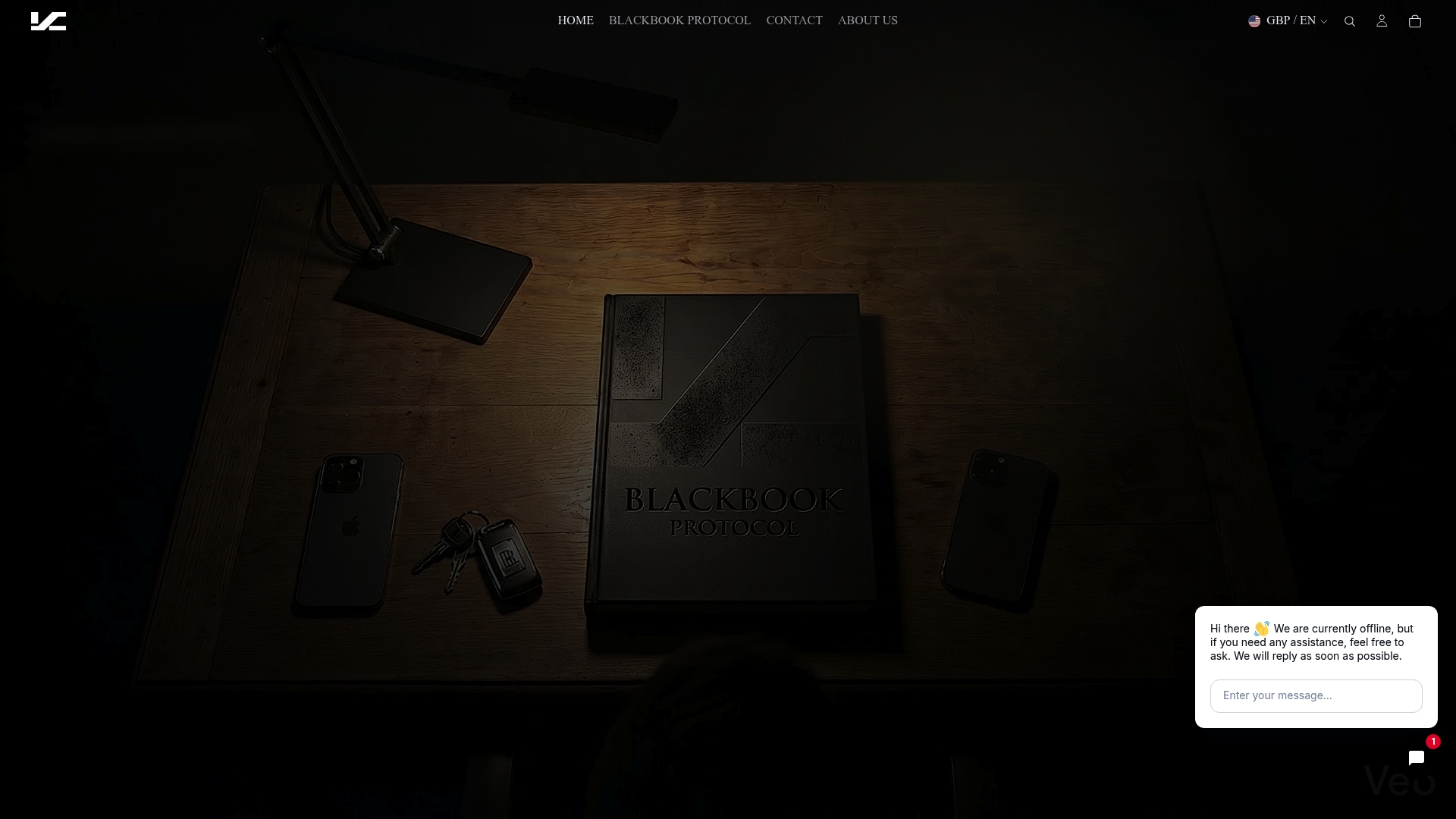
Blackbookprotocol provides structured governance frameworks for wealth advisers and compliance officers who need more than a generic checklist. The Blackbook Protocol Hardback covers UK Trust Law, asset protection structures, and corporate governance blueprints designed for professional implementation. For advisers building audit-ready compliance programmes, the digital templates and audio guides offer practical tools for documentation, policy design, and governance frameworks. These resources are built for practitioners who need to implement, not just understand, the standards that regulators expect to see.
FAQ
What is a wealth advisory compliance checklist?
A wealth advisory compliance checklist is a structured list of regulatory obligations an SEC-registered adviser must meet, covering written policies, recordkeeping, custody, marketing, and incident response. It serves as both an operational guide and an audit-readiness tool.
What does Rule 206(4)-7 require from advisers?
Rule 206(4)-7 requires written policies and procedures tailored to the firm’s business, designation of a CCO, and a documented annual review that identifies gaps and tracks remediation.
How does Regulation S-P affect the compliance checklist?
Regulation S-P amendments require firms to notify vendors within 72 hours of a breach and customers within 30 days. Both deadlines must be reflected in incident response procedures and vendor contracts within the compliance programme.
How often should a wealth advisory compliance checklist be reviewed?
The minimum standard is an annual review, but the checklist should be updated whenever a material change occurs, such as a new vendor, a change in service model, or a regulatory amendment. Static annual reviews without interim updates are a documented exam risk.
What tools support wealth management compliance requirements?
MyComplianceOffice centralises policy management and supervision logs. Smarsh handles multi-channel recordkeeping and archiving. Both reduce manual error and produce the audit trails that examiners request during SEC examinations.
0 comentarios